One of these composers is familiar to almost every music lover, although chiefly through a single work. The other remained almost entirely forgotten until only a few decades ago. Max Bruch and Carl Frühling meet in a programme of two piano quintets that reveals a less familiar face of Romanticism.
Carl Frühling was born in Lviv in 1868, but received his musical education and spent most of his life in Vienna. A highly regarded chamber pianist, he nevertheless saw his own compositions disappear from the repertoire, while many of the more than one hundred works listed in catalogues have either been lost or are still awaiting rediscovery. Cellist Steven Isserlis, who has played a leading role in reviving Frühling's music, discovered a copy of the Piano Quintet in the library in Hanover. Meanwhile, the archives of the Austrian Broadcasting Corporation revealed a file marked with the large letter "J", identifying the composer as Jewish and serving as a stark reminder of the persecution that ultimately erased his music from concert life. The Piano Quintet in F-sharp minor, Op. 30 was composed in October 1892 and published two years later. Even the marking of its opening movement – Allegro molto agitato ed appassionato (very agitated and passionate) – gives a clear indication of the work's expressive character.
The story of Max Bruch's Piano Quintet in G minor is very different. The work was commissioned by Andrew George Kurtz, a businessman, art collector, long-standing member of the Liverpool Philharmonic Society, and an accomplished amateur pianist. A resident string quartet regularly met at his home, where chamber music formed part of the friends' social gatherings. Bruch promised to write a quintet for them, but progress was slow. In 1886, he sent Kurtz the score with the finale still unfinished. Two years later, the musicians from Liverpool wrote to remind the composer that they could seldom perform the work because they were still waiting for its conclusion. Bruch eventually supplied the completed finale, yet the score was not published until 1988 – almost a century after it had been finished.
The two quintets will be performed by Alicja Ptasiński and Alicja Poręba on violins, Igor Rudnicki on viola, Jakub Wyciślik on cello, and Dominik Wizjan on piano. This concert offers an encounter with a less familiar side of Romanticism, presenting works whose remarkable histories prove almost as fascinating as the music itself.
DETAILS
Off the beaten track
19-05-2027 19:00
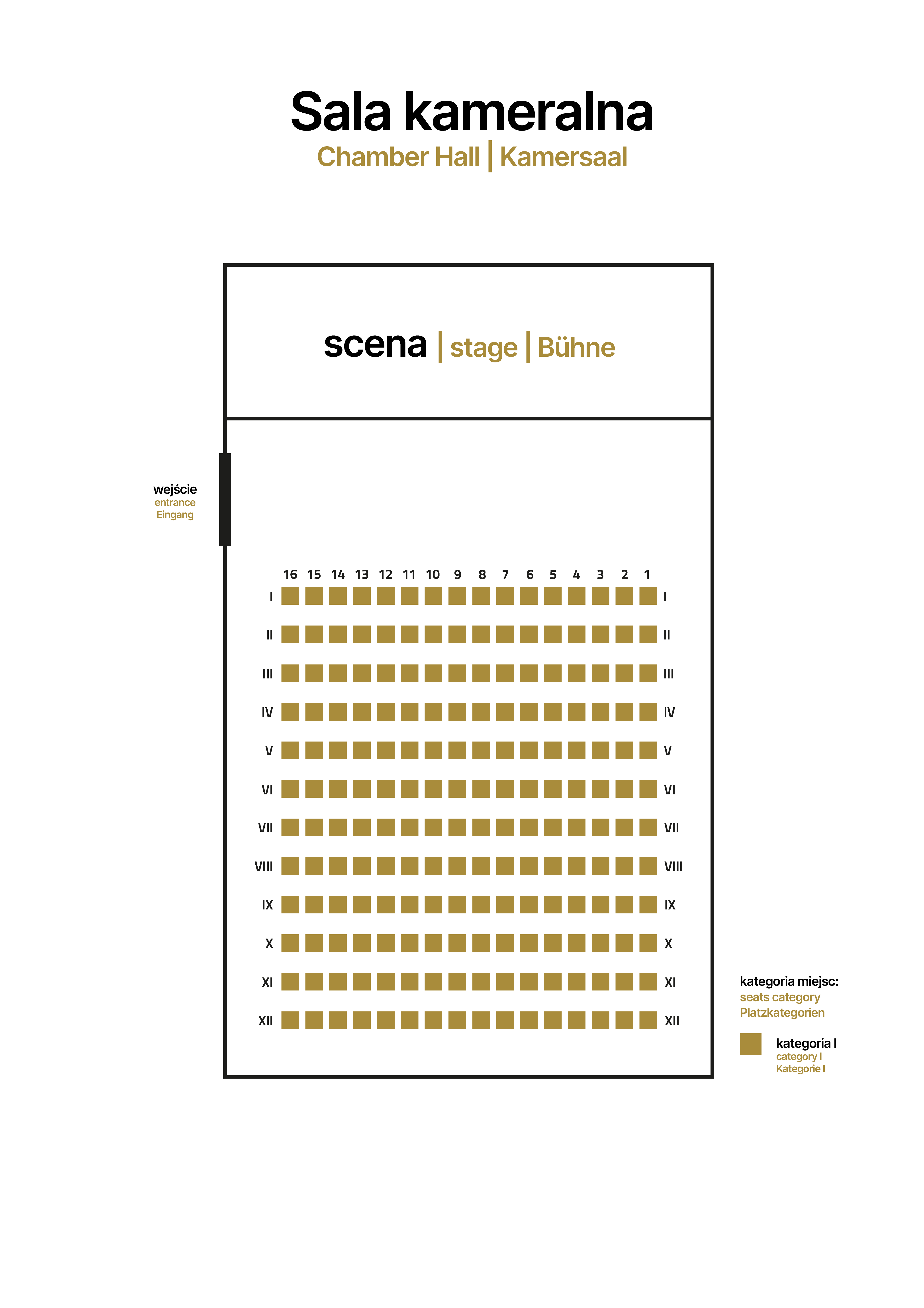
Chamber hallFilharmonia im. Mieczysława Karłowicza w Szczecinie
ul. Małopolska 48
70-515 Szczecin