Music about music – that is perhaps the simplest way to describe this evening's programme. Each of the three composers looks to the past, drawing on the works of earlier masters, transforming their musical language, and using it as the foundation for an entirely new artistic statement. Bach, Mozart, and the tradition of earlier musical forms are therefore present throughout the concert, even as we hear the music of Respighi, Martinů, and Reger.
The evening opens with Ottorino Respighi's arrangement of Three Chorales by Johann Sebastian Bach. The Italian composer retained the musical material of the original works but transferred it into the world of the large symphony orchestra. What was originally performed by a single organist is distributed among dozens of musicians, allowing Bach's melodies to travel from the strings through the woodwinds to the powerful sound of the brass.
Bohuslav Martinů also drew inspiration from earlier models in his Concerto for Oboe and Small Orchestra. The work was composed in 1955 for Czech oboist Jiří Tancibudek, who had emigrated to Australia. Its three-part structure, modest instrumentation, and the dialogue between soloist and orchestra evoke the classical concerto tradition, while its musical language is unmistakably twentieth-century. The solo part will be performed by Olivier Stankiewicz, principal oboist of the London Symphony Orchestra.
The evening concludes with Max Reger's Variations and Fugue on a Theme by Mozart, Op. 132. The composer took the theme from the first movement of Mozart's Piano Sonata in A major, K. 331, and developed it into eight variations followed by a monumental orchestral fugue. A simple Classical melody undergoes a series of transformations, becoming the foundation for one of the most important orchestral works of the late Romantic period.
For us in Western Pomerania, Reger also has a special local connection. The composer spent his summer holidays in Kołobrzeg on numerous occasions, returning there from 1905 until his final stay in 1913. He first came on the recommendation of his doctor, who had advised him to take a break from his exhausting workload. It was in Kołobrzeg that he saw the sea for the first time. He stayed there with his family in a house on what is now Cicha Street, took sea baths, and walked along the beach.
As so often happened with Reger, however, he did not fully follow his doctor's advice. Even on the Baltic coast, he continued to compose, conduct the local spa orchestra, perform as a pianist, and improvise on the organ of Kołobrzeg Cathedral. During his subsequent stays, he worked on violin, choral, and organ compositions, among others. He became so attached to the city that he is said to have dreamed of being buried by the sea, with the sound of its waves accompanying his eternal rest.
The Szczecin Philharmonic Symphony Orchestra will be conducted by George Tchitchinadze. The programme demonstrates that the history of music is a conversation carried on across centuries – Bach speaks through Respighi, Mozart through Reger, while earlier musical forms return in Martinů's concerto in an entirely new guise.
DETAILS
Beyond Time
21-05-2027 19:00
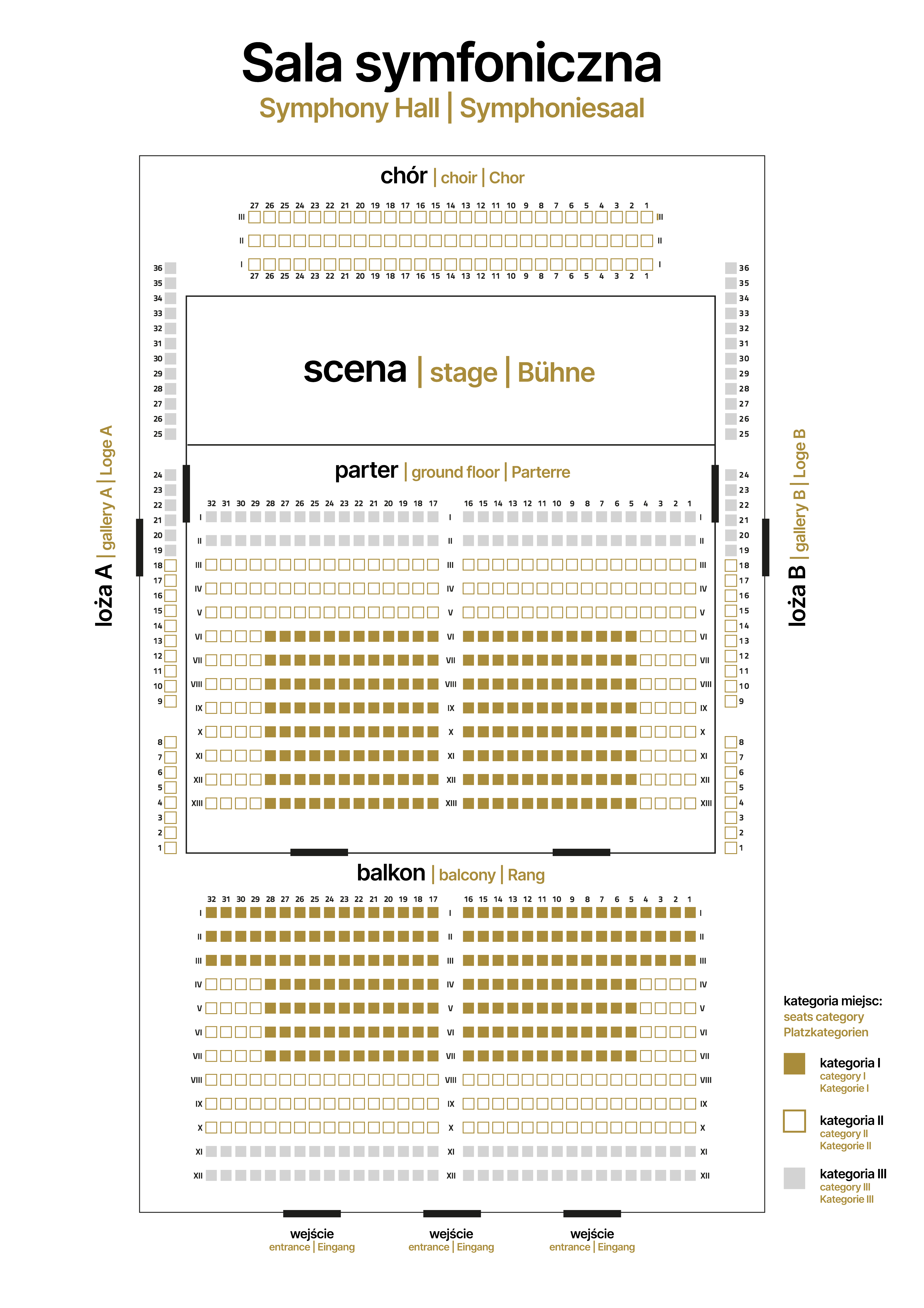
Symphony HallFilharmonia im. Mieczysława Karłowicza w Szczecinie
ul. Małopolska 48
70-515 Szczecin