Why does a particular work become famous all over the world? How is it that some melodies can be hummed by almost everyone? Or that out of dozens – or even hundreds – of compositions, only one achieves truly iconic status? We invite you to a new season of the Symphonic Monuments series, in which we will continue our search for the ideas, meanings, symbols, and phenomena behind the most celebrated orchestral works. It is a unique opportunity to experience a live, practical lesson in music, as well as to explore history and the art of conscious listening. As always, your guides will be our Director, Przemysław Neumann, and the Szczecin Philharmonic Orchestra.
Mozart’s Symphony in G minor, K. 550, opens with a musical motif that almost everyone has heard at least once in their lifetime. There is no grand or ceremonial introduction here – the music begins quietly, almost hesitantly. Mozart creates a world in which everything seems to grow from a single emotional source. Added to this is the relatively rare key of G minor, associated with some of his most intense and deeply personal musical statements. Even the history of the symphony’s composition remains unclear: we do not know the occasion for which it was written, nor whether Mozart ever heard it performed in a form he considered fully satisfactory. All of this makes it a work that is both extraordinarily precise in its construction and profoundly mysterious.
Perhaps it is precisely this ambiguity that has made Symphony No. 40 one of the most recognisable works in the history of music. It is a piece that operates on both intuitive and analytical levels: it can be experienced emotionally, but it can also be studied, examined, and dissected in detail. The many dimensions of this masterpiece will be explored in the lecture preceding the performance.
It is also worth noting that Symphony in G minor, K. 550, is among those works that have transcended the concert hall and even become the subject of scientific research.
Let us give a nod to the disciples of Hippocrates among our audience-and we know there are many of you. In clinical and neurophysiological studies, listening to this very symphony has been used as a controlled stimulus for observing the body’s responses. Researchers have analysed, among other things, changes in cerebral blood flow velocity (CBFV) in the middle cerebral artery (MCA) measured using transcranial Doppler ultrasound (TCD), as well as autonomic parameters such as heart rate (HR) and respiratory rate (RR). The results demonstrate subtle but measurable effects, including a gradual reduction in these indicators during exposure to the music, suggesting an influence on the regulation of the autonomic nervous system through modulation of sympathetic and parasympathetic activity, as well as haemodynamic and respiratory changes observed in mixed-effects regression models.
In other words, science has proven that Mozart makes us feel better.
That is exactly what Symphonic Monuments is all about!
STRABAG is the Patron of the 2026/2027 artistic season.

DETAILS
Symphonic Monuments | Mozart
31-10-2026 19:00
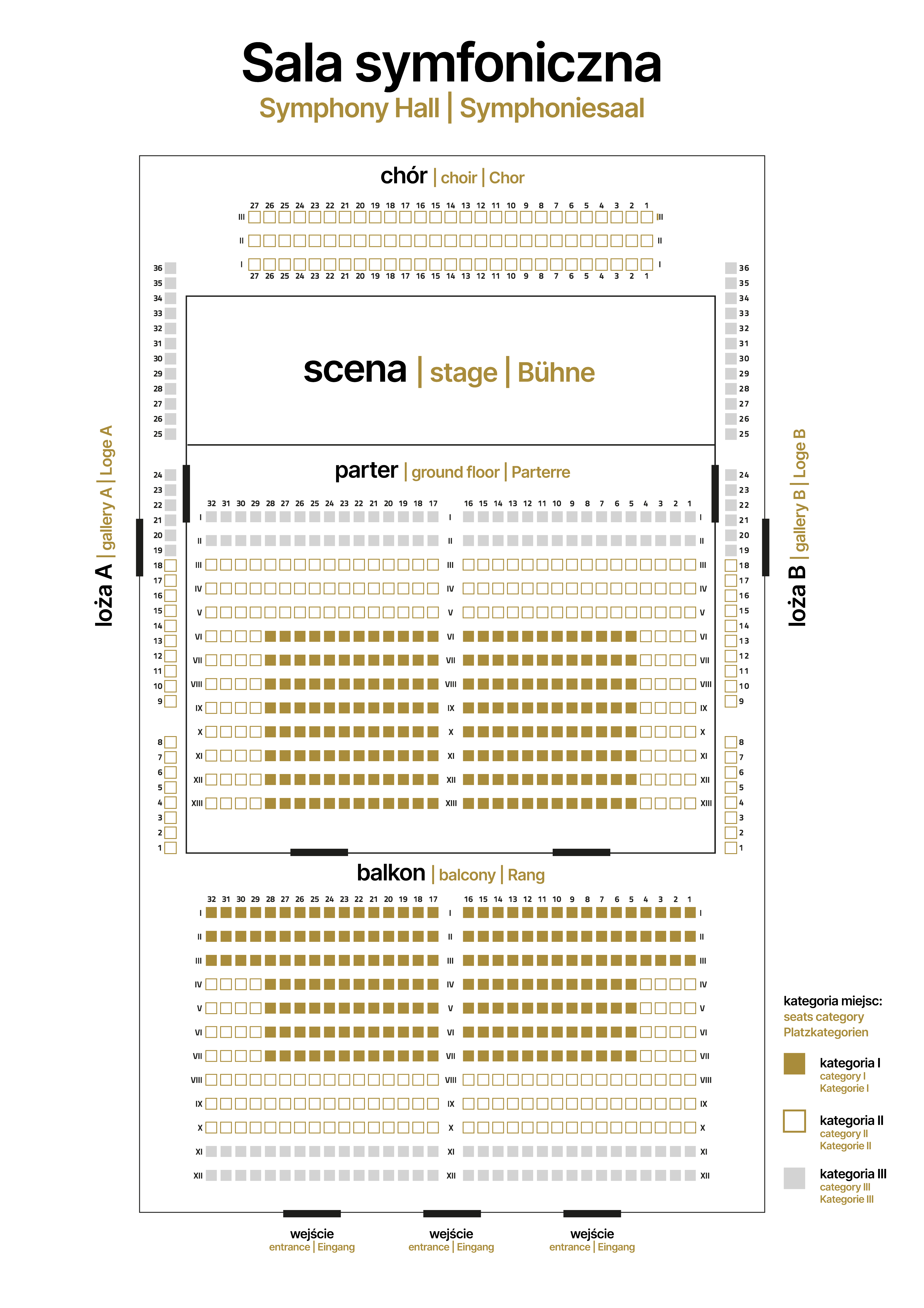
Symphony HallFilharmonia im. Mieczysława Karłowicza w Szczecinie
ul. Małopolska 48
70-515 Szczecin