“I saw almost nothing except blank pages; at most, here and there, a few Egyptian hieroglyphs appeared on certain sheets – completely incomprehensible to me – written merely as cues for him. He played almost the entire solo part from memory because, as so often happened, he had not yet found the time to write it all down.”
These were the impressions recorded by Ignaz von Seyfried, a friend of Ludwig van Beethoven who had the misfortune of serving as page-turner at the premiere of the Piano Concerto in C minor, in which the composer also appeared as soloist. Today, the concerto is one of Beethoven’s most beloved works. The two principal themes of the first movement – the first short, forceful, and fragmented, so characteristic of Beethoven, and the second beautiful, joyful, and lyrical – are melodies that almost everyone has heard at least once in their lives. And the theme of the final movement is so irresistibly memorable that we may all find ourselves humming it for the rest of the week.
There are reasons to believe that Beethoven approached relationships with women much as he approached many other aspects of life: with characteristic intensity and spontaneity, relying more on passionate feeling than on the patient cultivation of lasting relationships. Women played an important role in his life, yet none of these relationships developed into a permanent partnership. He maintained close ties with women from his circle – friends, pupils, and aristocratic patrons – and his correspondence reveals how deeply he experienced these connections. He remembered small gestures, treasured gifts they had given him, and often returned in his thoughts to moments they had shared. Emotions held great power over him and were rarely moderated by emotional distance.
The most enigmatic trace of this aspect of his life remains the famous 1812 letter to the “Immortal Beloved.” Her identity remains unknown, despite numerous theories. The letter itself is intensely personal, filled with longing, tension, and emotional vulnerability. It reveals a man yearning for closeness yet unable to secure it within the realities of his life. To this day, the mystery remains one of the most fascinating episodes in Beethoven’s biography.
We will speak in greater detail about Mozart’s symphony the following day, when it becomes the focus of another event in our Symphonic Monuments series.
We are delighted to welcome another outstanding female artist. Born in Odesa in 1990, Olga Zado began her concert career at the age of just seven. At twelve, she made her debut in the philharmonic halls of Hamburg and Berlin. Since then, she has appeared as a soloist in many of Europe’s leading concert venues and has amassed an impressive collection of international awards.
How will she interpret Beethoven’s world of emotional turbulence and longing? We will soon find out.
DETAILS
Symphonic Foundations
30-10-2026 19:00
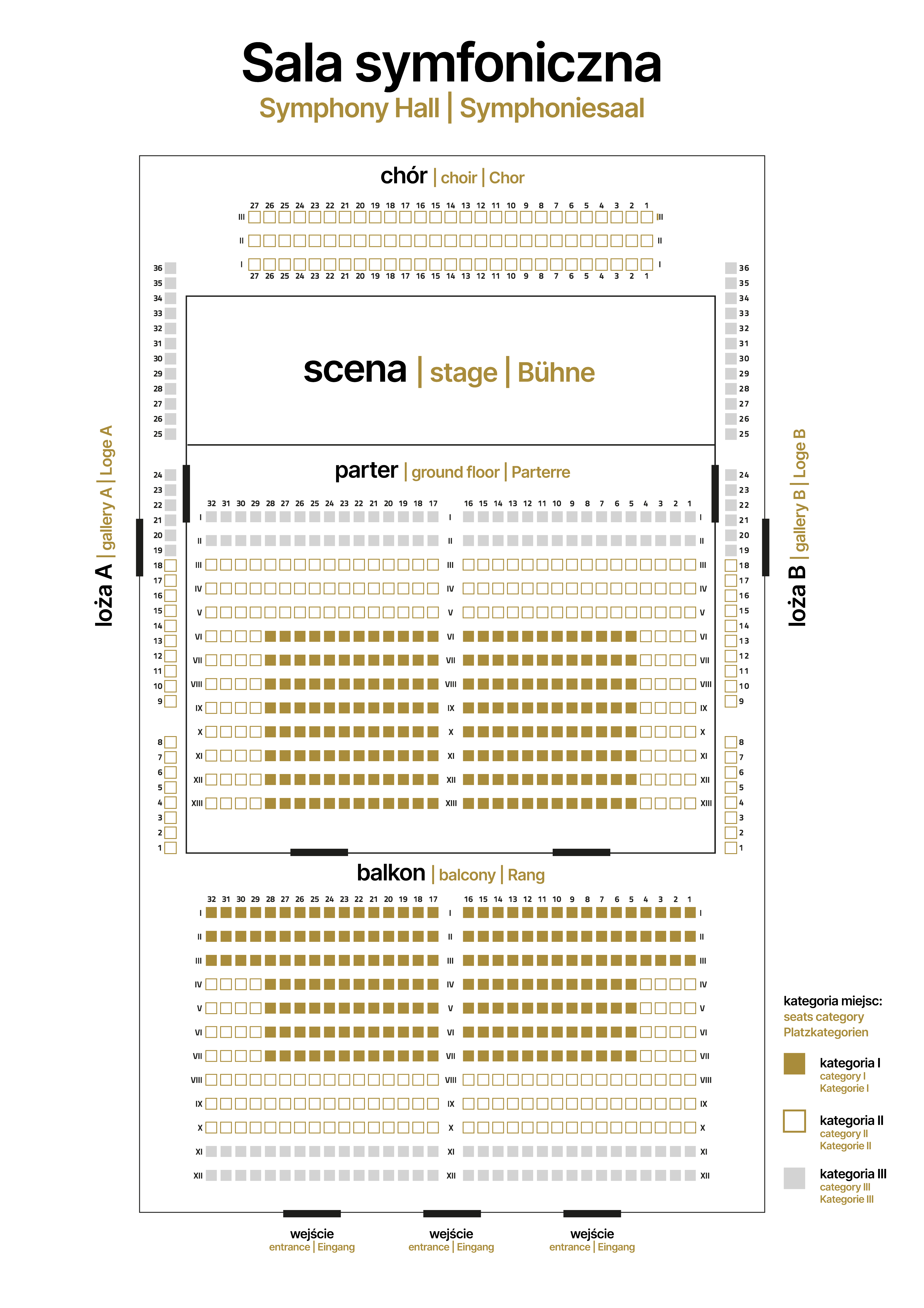
Symphony HallFilharmonia im. Mieczysława Karłowicza w Szczecinie
ul. Małopolska 48
70-515 Szczecin