Two virtuosic trumpet concertos in a single programme promise not only a breathtaking display of technical brilliance from one of today's leading trumpet soloists, but also a wonderful opportunity to pause and appreciate this extraordinary instrument. After all, who among us didn't pretend to play the trumpet as a child? There is something undeniably captivating about it. Throughout history, the trumpet has symbolised glory, honour, and triumph. It has long been associated with nobility and warriors-unlike, forgive us, our colleagues in the woodwind section, whose instruments traditionally belonged to shepherds and common folk. It is an instrument that embodies the elements of fire and air.
Since 2019, Spanish trumpeter Esteban Batallán has served as Principal Trumpet of the Chicago Symphony Orchestra, one of the world's finest orchestras and home to a legendary brass section. As a soloist, he has performed with ensembles including the Chicago Symphony Orchestra, Ensemble Orchestral de Paris, Hong Kong Philharmonic Orchestra, the Granada City Orchestra, the Spanish Radio and Television Symphony Orchestra, Royal Philharmonic Orchestra of Galicia, the National Youth Orchestra of Spain, Gstaad Festival Orchestra, Geneva Camerata, the Symphony Orchestra of India, and the Bilbao Symphony Orchestra. His repertoire spans the great classics, newly commissioned works written especially for him, and even his own compositions.
The history of the trumpet stretches back to the distant past. Around 1500 BC-or perhaps even earlier-people discovered that hollowed-out animal horns could produce loud, far-reaching sounds. Over time, these primitive instruments evolved and were crafted from metal and ceramic. For centuries, the trumpet served primarily practical purposes: military signals, warnings, and religious ceremonies. It was only towards the end of the Middle Ages that it gradually began to emerge as a true musical instrument.
The eighteenth century and the beginning of the nineteenth century brought decisive innovations. At first, players used interchangeable lengths of tubing to alter the instrument's pitch, although changing them required interrupting the performance. This was followed by the invention of the keyed trumpet, which allowed a fully chromatic scale but at the expense of tonal quality. The real breakthrough came around 1818 with the introduction of valves. They gave the trumpet complete melodic freedom, accurate intonation, and the rich, resonant sound we recognise today. From that moment onwards, the trumpet became a fully fledged concert instrument, taking its place in the symphony orchestra before later becoming a defining voice in jazz and popular music. The concertos by Hummel and Telemann, performed this evening by Batallán, rank among the most celebrated works ever written for the instrument. Renowned for their dazzling virtuosity and brilliant craftsmanship, they continue to delight audiences around the world.
The concert will be conducted by Christian Schumann, described as "the brightest star of the new generation of German conductors." Renowned for his versatility, Schumann moves effortlessly between opera, symphonic repertoire, and film music. He collaborates with leading orchestras and artists worldwide while creating innovative projects that bring classical music into dialogue with electronic music, jazz, and video game scores. His fresh perspective on the classical repertoire promises an evening of memorable musical discoveries, complementing the dazzling virtuosity of the trumpet with equally compelling orchestral artistry.
Koncert towarzyszący III Międzynarodowemu Festiwalowi Trębaczy Trumpet Mania 2026.
Organizatorzy



Honorary Patronage



DETAILS
Power and Splendour
06-11-2026 19:00
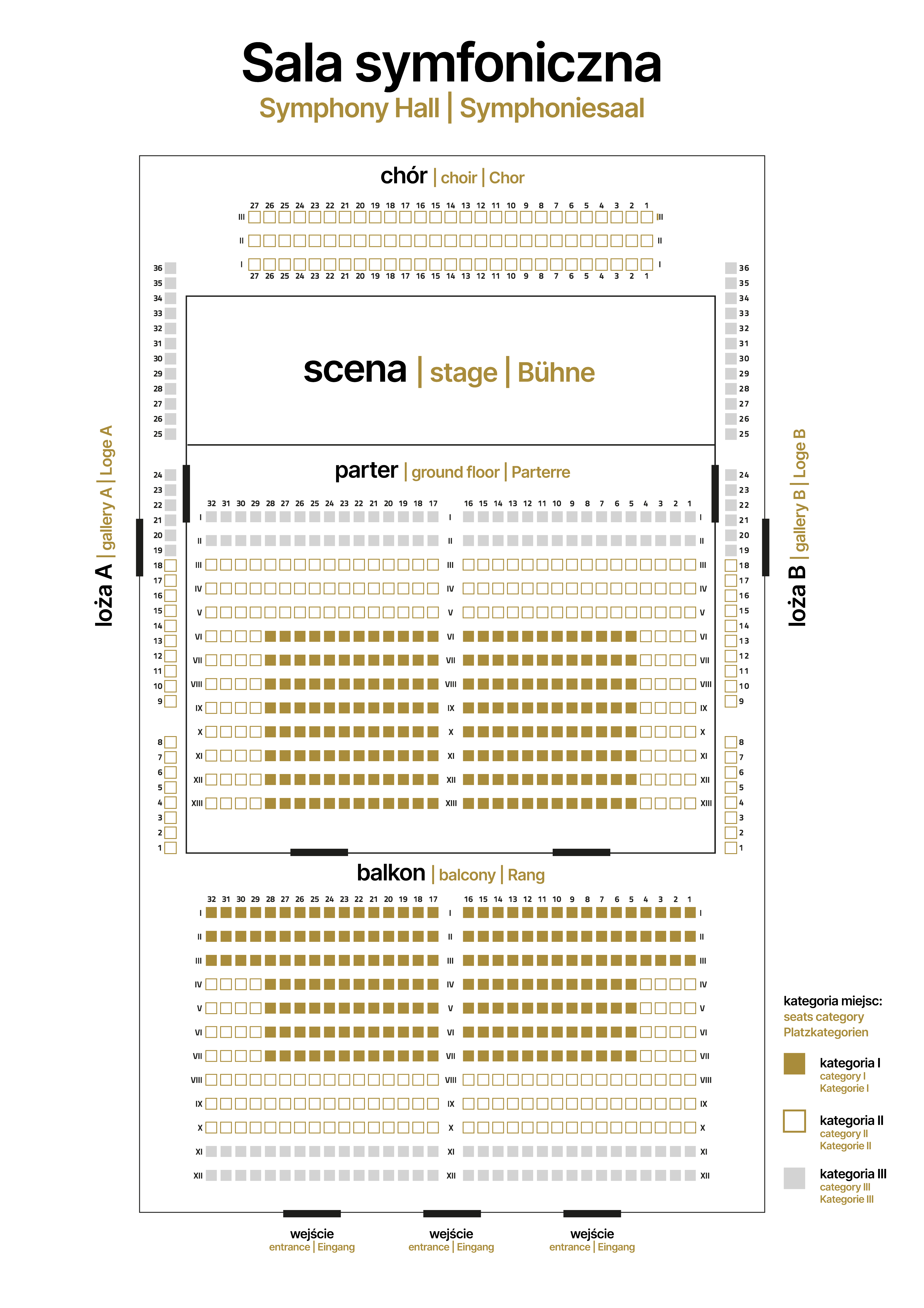
Symphony HallFilharmonia im. Mieczysława Karłowicza w Szczecinie
ul. Małopolska 48
70-515 Szczecin