No work in the history of music has been surrounded by such a dense web of legends, speculation, and mystery as Wolfgang Amadeus Mozart's Requiem in D minor. For more than two centuries, historians have attempted to separate fact from myth, while successive generations of listeners have remained fascinated by the stories that have grown around the composer's final work.
It all began in the summer of 1791. An unknown man arrived at Mozart's home to commission a Requiem Mass and refused to reveal the identity of his sender. Today, we know that he was acting on behalf of Count Franz von Walsegg. The anonymous messenger appeared suddenly, delivered the commission, and disappeared. A few years later, the story began to take on a life of its own. In nineteenth-century biographies, this figure gradually transformed into an envoy of death, or even a supernatural visitor arriving from another world.
Around the same time, another legend emerged: that Mozart became convinced he was composing music for his own funeral. His illness worsened, his strength gradually faded, and the score took shape in an atmosphere of growing anxiety. Later accounts described the composer as believing that he had received a commission from beyond the grave and was writing his own farewell to the world. Historians treat these stories with considerable caution, yet it is difficult to find another work whose history has become so closely linked to the image of an artist confronting his own mortality.
The mysteries did not end with Mozart's death on 5 December 1791. On the contrary, that is when a new series of questions began. The Requiem remained unfinished. Mozart's manuscript breaks off after only a few bars of the Lacrimosa. The remaining sections were completed by his students and collaborators, most notably Franz Xaver Süssmayr. For more than two hundred years, musicologists have debated where Mozart's contribution ends and where that of his pupil begins. Some sketches have been lost, certain documents were never recovered, and many details of the work's composition remain unclear to this day.
The nineteenth century produced even more extraordinary theories. One accused Antonio Salieri of poisoning Mozart. Another pointed to the Freemasons, who supposedly punished the composer for revealing Masonic secrets. New books, plays, and operas appeared. In the twentieth century, the film Amadeus helped cement these legends in popular culture. Historians have repeatedly demonstrated the lack of evidence supporting such accusations, yet the stories have proved remarkably resilient. The Requiem became more than a musical composition – it became a cultural enigma.
On the eve of the 235th anniversary of Mozart's death, it is worth considering the Requiem both as a masterpiece of sacred music and as one of the most fascinating phenomena in the history of European culture. For more than two centuries, new legends have continued to gather around this score, with each era adding its own chapter to the story. The mystery has endured with extraordinary persistence, perhaps because its source lies not in the composer's biography but in the music itself. It is the music that, for more than two hundred years, has never allowed us to stop asking questions.
Projekt „#2_Pianos. Muzyczny most pogranicza – dziedzictwo fortepianów” realizowany we współpracy z Uckermärkische Bühnen Schwedt jest współfinansowany ze środków Unii Europejskiej z Europejskiego Funduszu Rozwoju Regionalnego w ramach Programu Współpracy Interreg VI A Meklemburgia-Pomorze Przednie / Brandenburgia / Polska 2021-2027.
STRABAG is the Patron of the 2026/2027 artistic season.

Grants

DETAILS
Requiem. An Unfinished Testament
04-12-2026 19:00
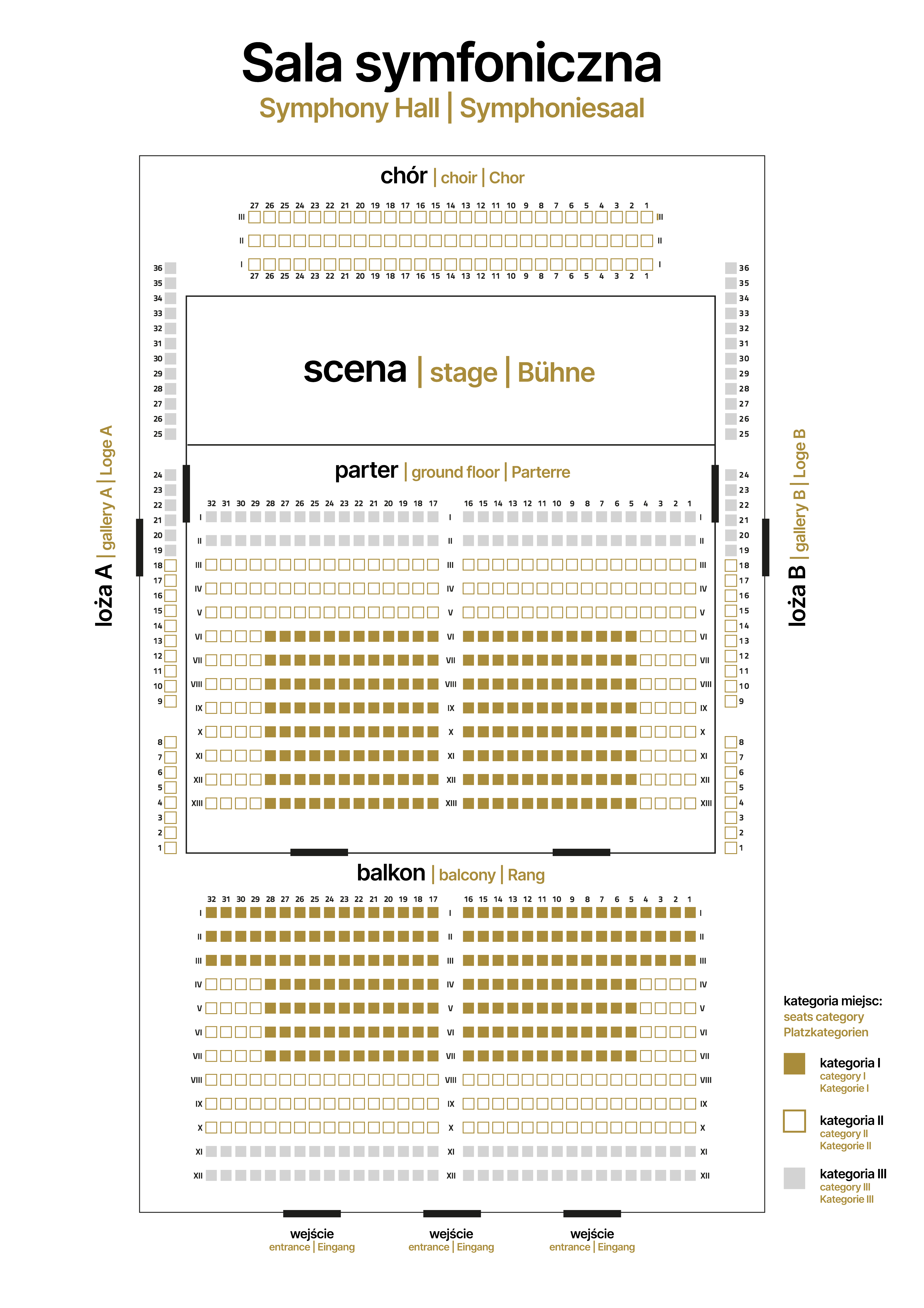
Symphony HallFilharmonia im. Mieczysława Karłowicza w Szczecinie
ul. Małopolska 48
70-515 Szczecin