"Music is like the sea – when you stand on one shore, it is impossible to see the other". This is one of our favourite quotations, and it resonates especially well in a maritime city such as Szczecin. And although countless jokes try to convince us that Szczecin is not really by the sea, our maritime identity is deeply embedded in our DNA. Cultural institutions, universities, businesses, monuments, notable figures, symbols, traditions, and history – all of these remind us that whenever a maritime theme appears in a concert programme, music inspired by the sea seems to speak to us in a particularly special way. It was therefore impossible not to include in the Symphonic Monuments series a symphonic poem that stands among the most magnificent musical portrayals of the sea in the entire history of music.
In the first movement, De l’aube à midi sur la mer (From Dawn to Noon on the Sea), we witness the awakening of a new day, surrounded by a calm sea. From dark, seemingly motionless sonorities, isolated impulses emerge that gradually combine into a flowing, wave-like motion. The music grows denser and more energetic, as though light were slowly penetrating the horizon. The culmination represents a moment of fullness, when all musical elements – motion, colour, and dynamics – reach their greatest intensity.
In the second movement, Jeux de vagues (Play of the Waves), everything is movement, lightness, and constant change. Brief motifs appear and disappear as if they had neither beginning nor end, while the orchestra becomes a shimmering surface of water reflecting light and shadow. The music evokes the ceaseless motion of waves that can neither be stopped nor fully grasped.
The third movement, Dialogue du vent et de la mer (Dialogue of the Wind and the Sea), introduces greater tension and drama. From the outset, stronger dynamic contrasts and more decisive orchestral gestures suggest the collision of opposing forces. The music builds broad arcs of tension, leading to a powerful climax in which the orchestra reaches its full sonic potential. The conclusion stands as a tribute to the strength and unpredictability of nature.
Difficult as it may be to believe today, the critics were merciless after the work’s Paris premiere in 1905. “I neither hear, nor see, nor smell the sea” and “The audience expected an ocean and received a bowl of agitated water” were among the milder comments. Yet, as so often happens, the great authorities of the day misjudged the work. After a gradual and hard-earned ascent to recognition, La mer secured its place in the orchestral canon and today stands alongside the other great masterpieces of the Symphonic Monuments repertoire.
STRABAG is the Patron of the 2026/2027 artistic season.

DETAILS
Symphonic Monuments | Debussy
30-01-2027 19:00
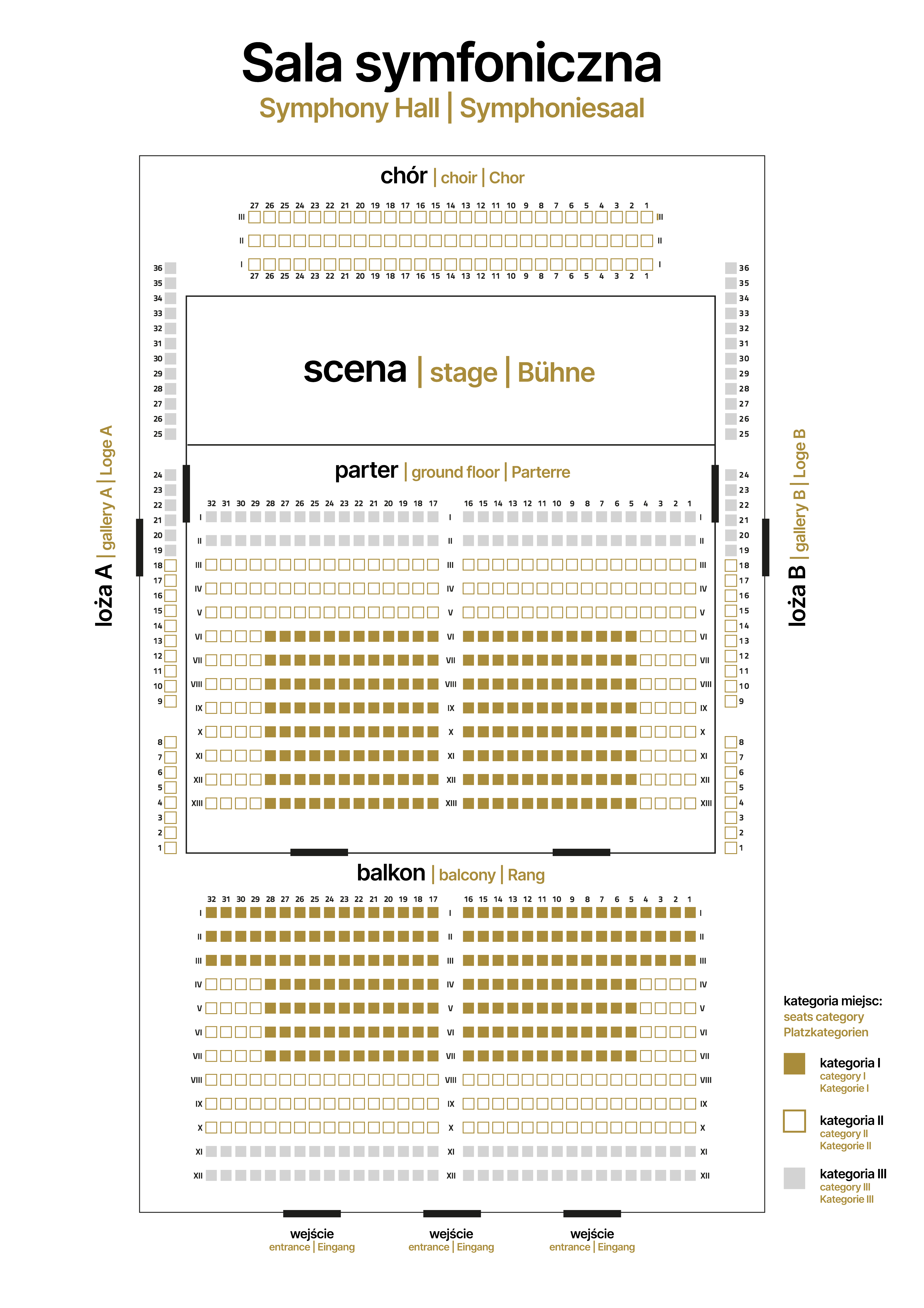
Symphony HallFilharmonia im. Mieczysława Karłowicza w Szczecinie
ul. Małopolska 48
70-515 Szczecin