1806-1845. Forty years during which Poland disappeared from the map, returned as the Duchy of Warsaw, was transformed into the Russian-dependent Kingdom of Poland, made an attempt to regain independence, and saw the November Uprising end in defeat. At the same time, the music of Elsner, Kurpiński, Chopin and Moniuszko was being created. This concert programme is a musical record of Polish history in the first half of the nineteenth century.
In 1806, Poland had been absent from the map of Europe for eleven years. The lands of the former Polish-Lithuanian Commonwealth were divided between Russia, Prussia and Austria. The situation changed with Napoleon’s war against Prussia. French troops entered Polish lands, and an uprising against Prussia broke out in Greater Poland. That same year, Józef Elsner’s String Quartets, Op. 8, were published, including String Quartet No. 3 in D minor, composed earlier during Elsner’s stay in Lviv.
In 1807, Napoleon established the Duchy of Warsaw. After his campaign against Russia in 1812 and the subsequent defeats of the French army, Russian forces occupied the lands of the Duchy.
The Congress of Vienna in 1815 decided its future. Most of the Duchy of Warsaw was transformed into the Kingdom of Poland. In this political reality, Warsaw became home to Józef Elsner and Karol Kurpiński. Around 1823, Kurpiński composed his Fantasy in C major for string quartet. Franciszek Lessel’s Fantasy in C major also belongs to the first half of the nineteenth century, although its exact date of composition is unknown. During the 1820s, Fryderyk Chopin, a pupil of Elsner, was also coming of age in Warsaw’s musical circles. Towards the end of that decade, he composed his first songs.
In November 1830, the November Uprising against Russia broke out. Chopin had left Warsaw several weeks earlier and was already outside the Kingdom of Poland. The uprising lasted until the autumn of 1831 and ended in defeat. The Great Emigration began, with Paris becoming its most important centre. Chopin settled there permanently. In the following years, he composed his remaining songs. At the same time, another generation of composers was coming of age in the Polish lands under foreign rule. In 1839, while studying in Berlin, Stanisław Moniuszko composed his String Quartet No. 1 in D minor.
Thus, between the beginning of the Napoleonic era and the mid-1840s, Elsner, Lessel, Kurpiński, Chopin, and Moniuszko created works. Forty years may seem like a short period in history. For Poland, however, it was a time of extraordinary turbulence.
DETAILS
Chopin's songs
10-02-2027 19:00
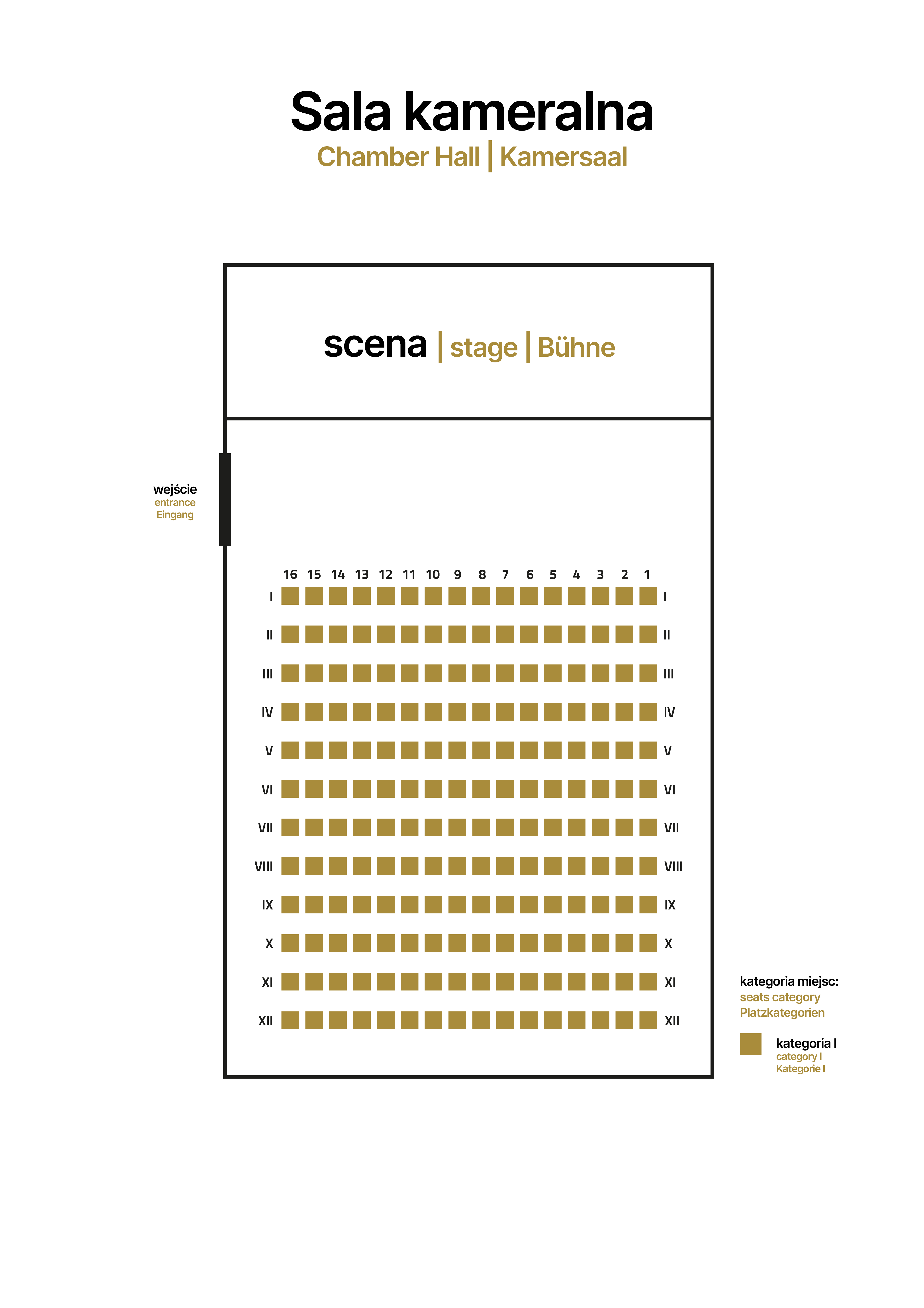
Chamber hallFilharmonia im. Mieczysława Karłowicza w Szczecinie
ul. Małopolska 48
70-515 Szczecin