If there is a single evening in Szczecin's history that deserves a lasting place in the story of world music, it is surely the concert of 20 February 1827. On that day, in the grand hall of the Shooting House (Schützenhaus), the orchestral version of Felix Mendelssohn Bartholdy's Overture to A Midsummer Night's Dream received its first public performance. Almost exactly two hundred years later – just six days after the bicentenary – the work returns in a performance by the Szczecin Philharmonic Symphony Orchestra.
The Shooting House stood on what was then Heiliggeiststraße, today's Świętego Ducha Street. Built only a few years earlier, the building housed a concert hall with seating for around four hundred people and was one of the most important venues in the emerging public concert life of Szczecin. Mendelssohn's appearance formed part of the second major winter concert of the season, conducted by Carl Loewe – the city's Director of Music, a distinguished composer, and one of the most influential musical figures in nineteenth-century Szczecin.
Mendelssohn was only eighteen years old, yet he arrived in Szczecin already recognised as the composer of works of astonishing maturity. He had written the overture the previous summer after reading the German translation of Shakespeare's comedy. In November 1826, he performed it privately at the piano with his sister Fanny, and it was later heard at a family musical gathering. It was in Szczecin, however, that the orchestral version was heard by a concert audience for the very first time. The famous Wedding March did not yet exist – the complete incidental music would not be composed until sixteen years later.
The evening in Szczecin was far more than the premiere of a single work. Mendelssohn appeared as composer, pianist, and orchestral musician. Together with Carl Loewe, he performed his own Concerto in A-flat major for two pianos, after which he played Carl Maria von Weber's Konzertstück in F minor entirely from memory. His performance made such an extraordinary impression that the audience broke with the local custom of withholding applause between individual works and rewarded him with enthusiastic ovations. After the interval, the young musician took his place among the first violins for a performance of Beethoven's Symphony No. 9 – at that time still a remarkably new work, having received its Vienna premiere less than three years earlier.
It was this remarkable evening that forever linked Szczecin with the life of one of the greatest composers of German Romanticism and the broader heritage of European music. The overture, first heard publicly in our city, quickly conquered concert halls across Europe and remains one of Mendelssohn's most beloved and recognisable works. Its performance on the bicentenary is therefore far more than a celebration of a fascinating local historical episode; it is a return to the event that secured Szczecin a permanent place on the map of world musical history.
DETAILS
Unbound Romantics
26-02-2027 19:00
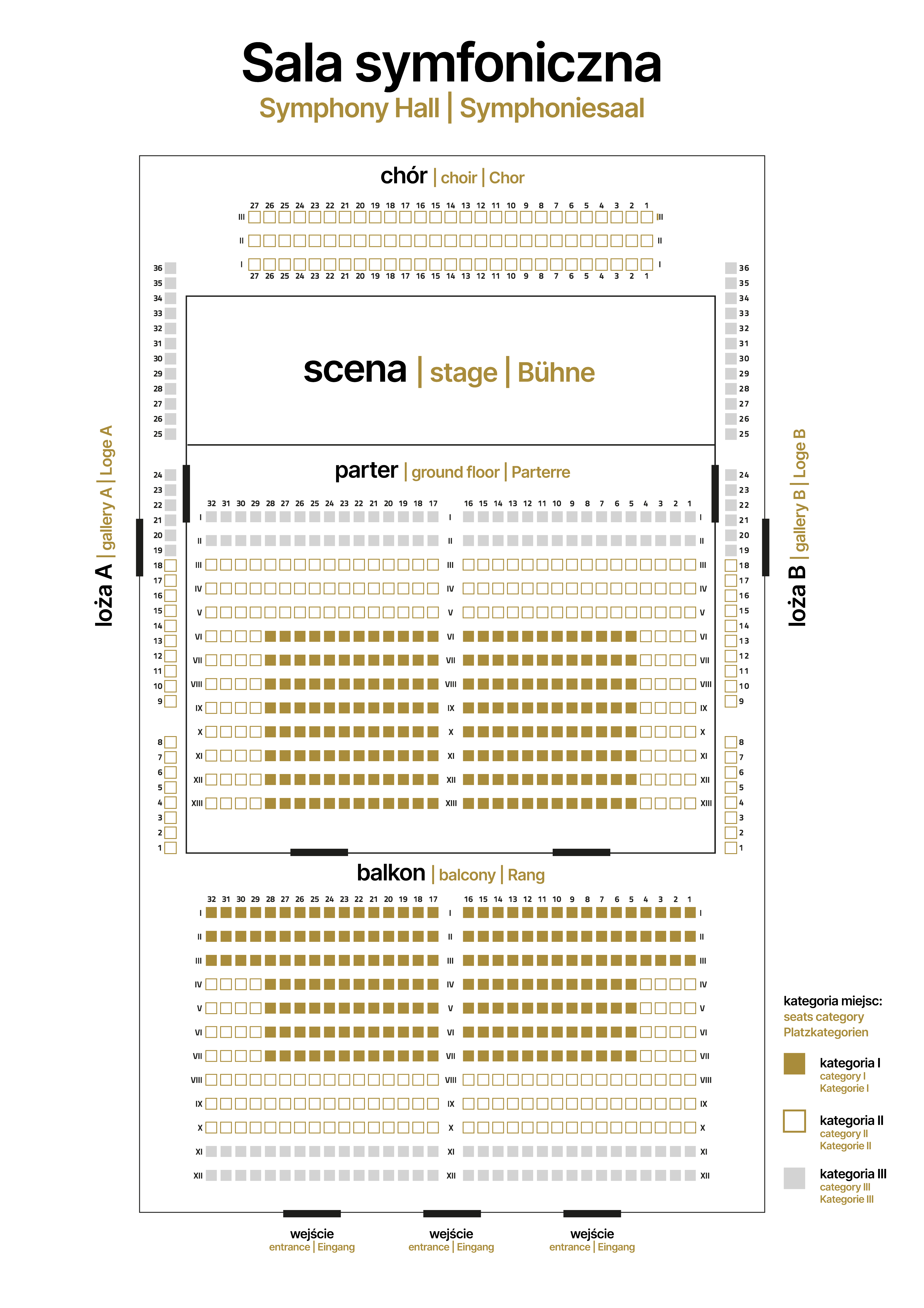
Symphony HallFilharmonia im. Mieczysława Karłowicza w Szczecinie
ul. Małopolska 48
70-515 Szczecin