Collegium Marianum is one of Europe's leading ensembles specialising in historically informed performances of early music on period instruments. Founded in Prague in 1997, it has spent nearly three decades bringing seventeenth- and eighteenth-century music back to life, combining historically informed performance practice with research into surviving scores and documents. The ensemble has appeared at renowned early music festivals, including Bachfest Leipzig, Tage Alter Musik Regensburg, and Utrecht Early Music Festival, and has performed in numerous European countries.
The artistic heart of Collegium Marianum is Jana Semerádová – flautist, conductor, and early music scholar, recognised as one of today's leading masters of the historical traverso flute. She studied at conservatories in Prague and The Hague and is the artistic director of Prague's Baroque Soirées series. She also collaborates with leading European ensembles specialising in Baroque repertoire.
The programme reveals a musical world in which family, friendship, and professional rivalry were intertwined as closely as the voices in Baroque counterpoint. Johann Bernhard Bach was Johann Sebastian's cousin and a respected organist in Eisenach. Little of his music has survived, but his orchestral suites endured in part because Johann Sebastian included copies of them in his own music collection. In the E minor Suite, alongside the French overture and dances, there is a movement entitled Les plaisirs (The Pleasures), from which the work's modern nickname is derived.
Johann Sebastian Bach and Georg Philipp Telemann shared a particularly close friendship and professional connection. Telemann became godfather to Bach's son, Carl Philipp Emanuel, who received his second name in his honour. When a new cantor was being sought for St Thomas Church in Leipzig in 1722, Telemann – not Bach – was initially the first choice. He used the offer to negotiate a higher salary in Hamburg and ultimately remained in his position there. Only after another candidate withdrew was Johann Sebastian Bach appointed to the post.
Telemann was not only an extraordinarily prolific composer and multi-instrumentalist, but also a passionate gardener. He asked friends throughout Europe to send him rare plants, and Handel himself sent him a crate of selected flowers from England. Telemann once described music as his "field and plough", but in his later years it acquired a new companion – his love of flowers. In Szczecin, we will hear his Flute Concerto in D major and Overture-Suite in D minor, works that demonstrate why he was regarded during his lifetime as one of the most important German composers.
The concert will conclude with Johann Sebastian Bach's Orchestral Suite No. 2 in B minor, BWV 1067, preserved in parts prepared in Leipzig around 1738-1739. The traverso flute is not merely one of the instruments in the orchestra here, but the true protagonist of the work. In the Polonaise, Bach used a melody associated with the Polish song Wezmę ja kontusz, while the suite concludes with the famous Badinerie – its title meaning a joke or playful diversion, although for the flautist this extraordinarily fast movement is one of the most demanding moments of the entire programme.
The Collegium Marianum concert will remind us that the Baroque was not a world of monumental geniuses creating in isolation. It was a living network of family connections, friendships, journeys, copied scores, and mutual inspiration – a world that Jana Semerádová and her ensemble recreate on period instruments.
DETAILS
Collegium Marianum | Once upon a time...
12-03-2027 19:00
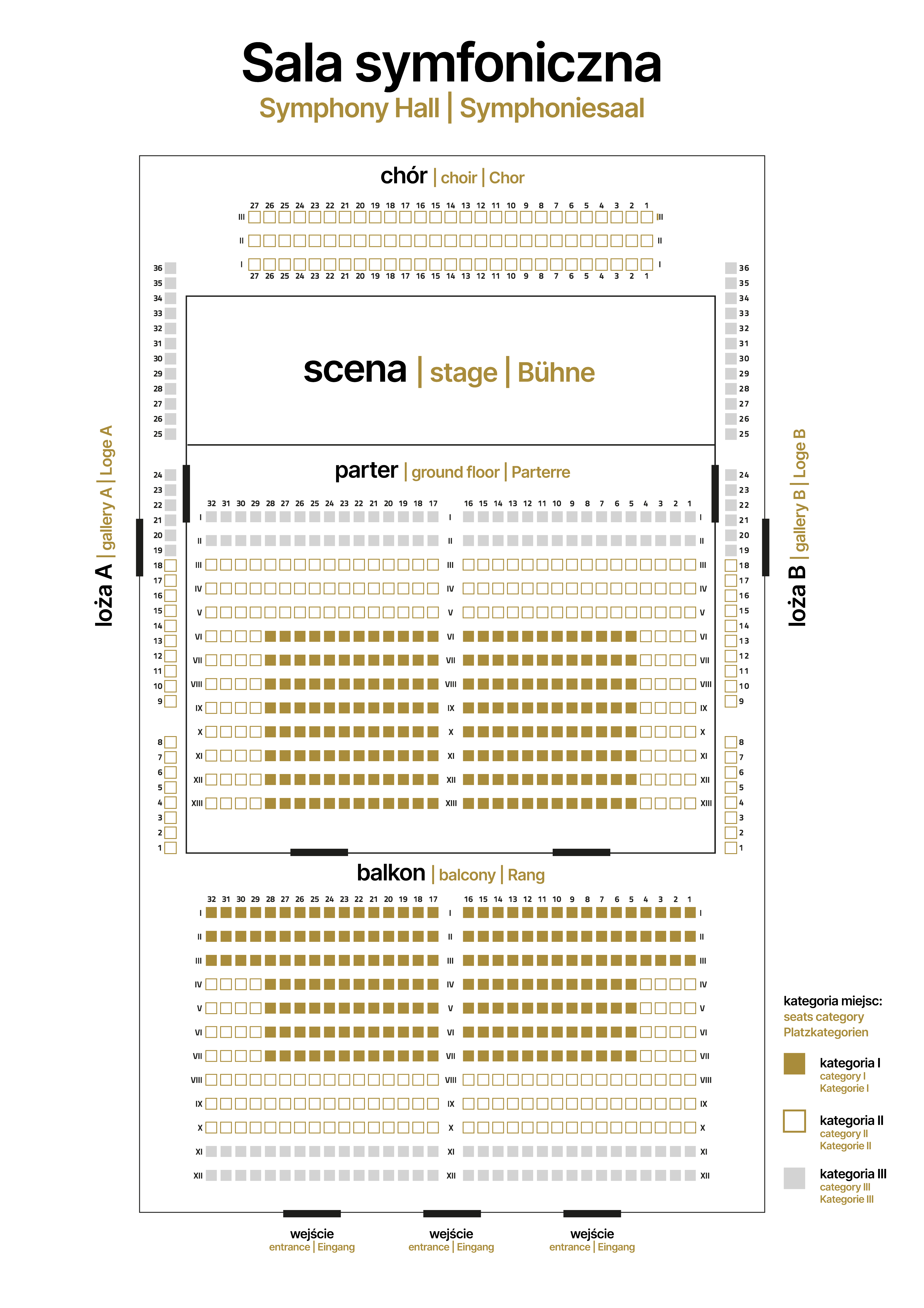
Symphony HallFilharmonia im. Mieczysława Karłowicza w Szczecinie
ul. Małopolska 48
70-515 Szczecin