A simple dance. A children's fairy tale. A single rhythm repeated for more than a quarter of an hour. It is hard to believe that such modest ideas gave rise to some of the most captivating masterpieces of twentieth-century music. After all, the greatness of music lies not in the idea itself, but in the composer's imagination and the way that idea is developed.
In 1887, Gabriel Fauré was already a respected organist and teacher, although his greatest achievements as a composer still lay ahead. During a summer stay in Le Vésinet, he wrote a short work inspired by the old Spanish pavane – a stately court dance. He himself regarded it as an elegant but relatively insignificant piece, intended for light open-air concerts. History, however, took a different course. This modest composition became one of the defining symbols of French elegance and remains Fauré's most frequently performed orchestral work.
When Igor Stravinsky was invited to write a violin concerto, he initially declined. He was not a violinist and feared that he would not be able to make convincing use of the instrument's possibilities. Only his collaboration with the outstanding violinist Samuel Dushkin persuaded him to accept the challenge. By 1931, Stravinsky was already one of the world's leading composers and was consciously searching for a new musical language. The result was a work that has secured a permanent place in the international violin repertoire.
Maurice Ravel, in turn, found inspiration in the world of childhood imagination. Mother Goose was written for Mimi and Jean Godebski, the children of his close friends. Although he was simultaneously working on the monumental ballet Daphnis et Chloé, he found time to compose a cycle of musical fairy tales for piano four hands, based on stories by Charles Perrault. A year later, he orchestrated the suite himself, proving that subtlety and simplicity could be just as captivating as monumental works. It is this orchestral version that has become the most popular.
The story behind Boléro is equally remarkable. A ballet commission from Ida Rubinstein inspired Ravel to create a work based on a single rhythm and only two themes. The composer changes nothing but the colours of the orchestra, gradually building tension throughout the piece. The result was a daring experiment that eventually became Ravel's most recognisable composition and one of the greatest musical phenomena of the twentieth century. Today's concert reminds us that great art is often born from the simplest of ideas.
DETAILS
In the Rhythm of Paris
05-03-2027 19:00
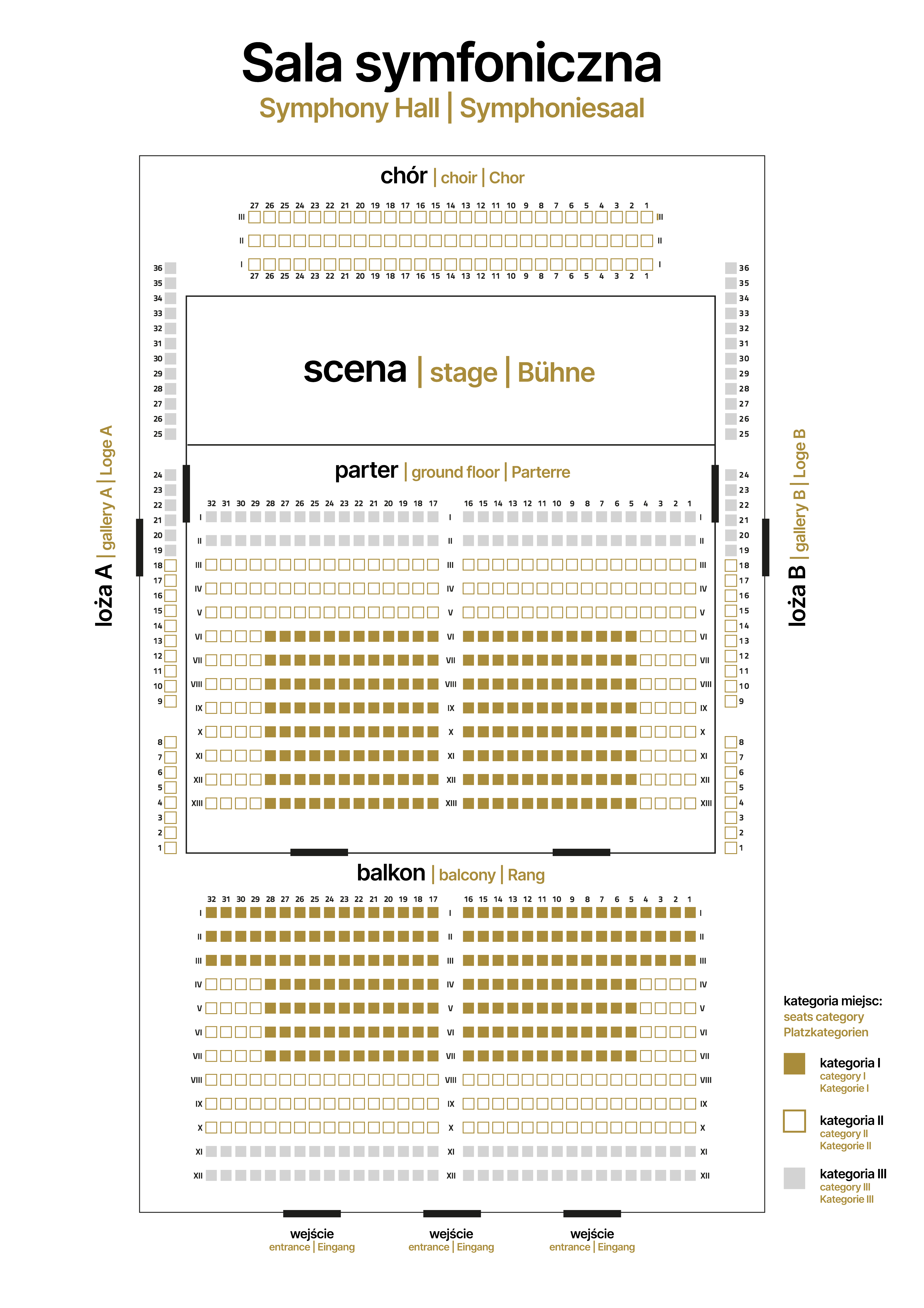
Symphony HallFilharmonia im. Mieczysława Karłowicza w Szczecinie
ul. Małopolska 48
70-515 Szczecin