The music of the great composers rarely appears in a vacuum. While music does not document political events like a chronicle or newspaper, it often bears the indelible mark of the era in which it was born, reflecting the societal shifts, political transformations, and moods that shaped the world around it. Ludwig van Beethoven is among those artists whose work is particularly compelling when viewed through the lens of history. His Fifth Symphony and Triple Concerto were conceived at a time when Europe was undergoing its greatest upheaval since the French Revolution.
The years 1804-1808 were marked by relentless political turmoil. In December 1804, Napoleon Bonaparte crowned himself Emperor of the French, bringing an end to revolutionary experimentation and embarking on the creation of his own empire. A year later, the French army claimed a decisive victory at Austerlitz, defeating the combined forces of Austria and Russia. Vienna, Beethoven’s home, fell to French troops. By 1806, the Holy Roman Empire – a political entity that had endured for nearly a millennium – collapsed entirely. That same year, Napoleon crushed Prussia at Jena and Auerstedt, consolidating his power over Central Europe before reaching the pinnacle of his dominance with the Treaties of Tilsit in 1807. Europe seemed to belong to a single man. Only in 1808 did the first cracks appear, as uprising flared in Spain and the long Peninsular War began.
Szczecin, too, found itself swept into this grand historical narrative. Following Prussia’s defeat in 1806, French General Antoine Lasalle arrived outside the city with a small cavalry unit. Despite being defended by over five thousand troops and hundreds of cannons, the Prussian commander, Friedrich von Romberg, was duped into believing he faced a far superior force and surrendered the fortress almost without a fight. The news astonished Napoleon himself, who reportedly joked that if his light cavalry could capture fortresses this way, he might as well disband his corps of engineers and melt down his heavy artillery for church bells. Szczecin remained under French control until 1813, serving as a vital Baltic stronghold for the Napoleonic Empire.
This was the world in which Beethoven lived and worked. Just a few years earlier, he had weathered a profound personal crisis brought on by his worsening deafness. In 1802, while staying in Heiligenstadt near Vienna, he penned the moving document known today as the Heiligenstadt Testament. In it, he confessed his despair and admitted he had considered ending his life, yet ultimately resolved to persevere for the sake of his art. That decision inaugurated the most creative era of his life – what music historians now call his ‘heroic period’.
The Triple Concerto in C major, Op. 56, was composed around 1803-1804. It stands as Beethoven’s only completed concerto for three soloists – piano, violin, and cello – with orchestral accompaniment. Blending the intimacy of chamber music with concertante grandeur, the work exchanges the dramatic conflict typical of Beethoven’s output for a more serene and genial elegance, reflecting the cultured world of the Viennese aristocracy who remained his most crucial patrons.
The Fifth Symphony in C minor, Op. 67, written between 1804 and 1808, strikes a strikingly different tone. Among the most recognizable works in the history of music, it builds a sense of tension and relentless forward drive from its opening bars. For two centuries, listeners have heard in its pages a narrative of struggle, resilience, and ultimate triumph over adversity.
Historians record facts: battle dates, peace treaties, shifting borders, and the fall of nations. Composers capture something else entirely – the inner life of the people living through those events. Beethoven’s Fifth Symphony cannot tell us when Napoleon marched into Vienna or when Szczecin surrendered, but it allows us to feel the tension, uncertainty, hope, and sheer magnitude of a world changing before one’s eyes. Brought together, history and music offer a far richer, more captivating picture of the past.
DETAILS
In Defiance of Fate | Beethoven 200
02-04-2027 19:00
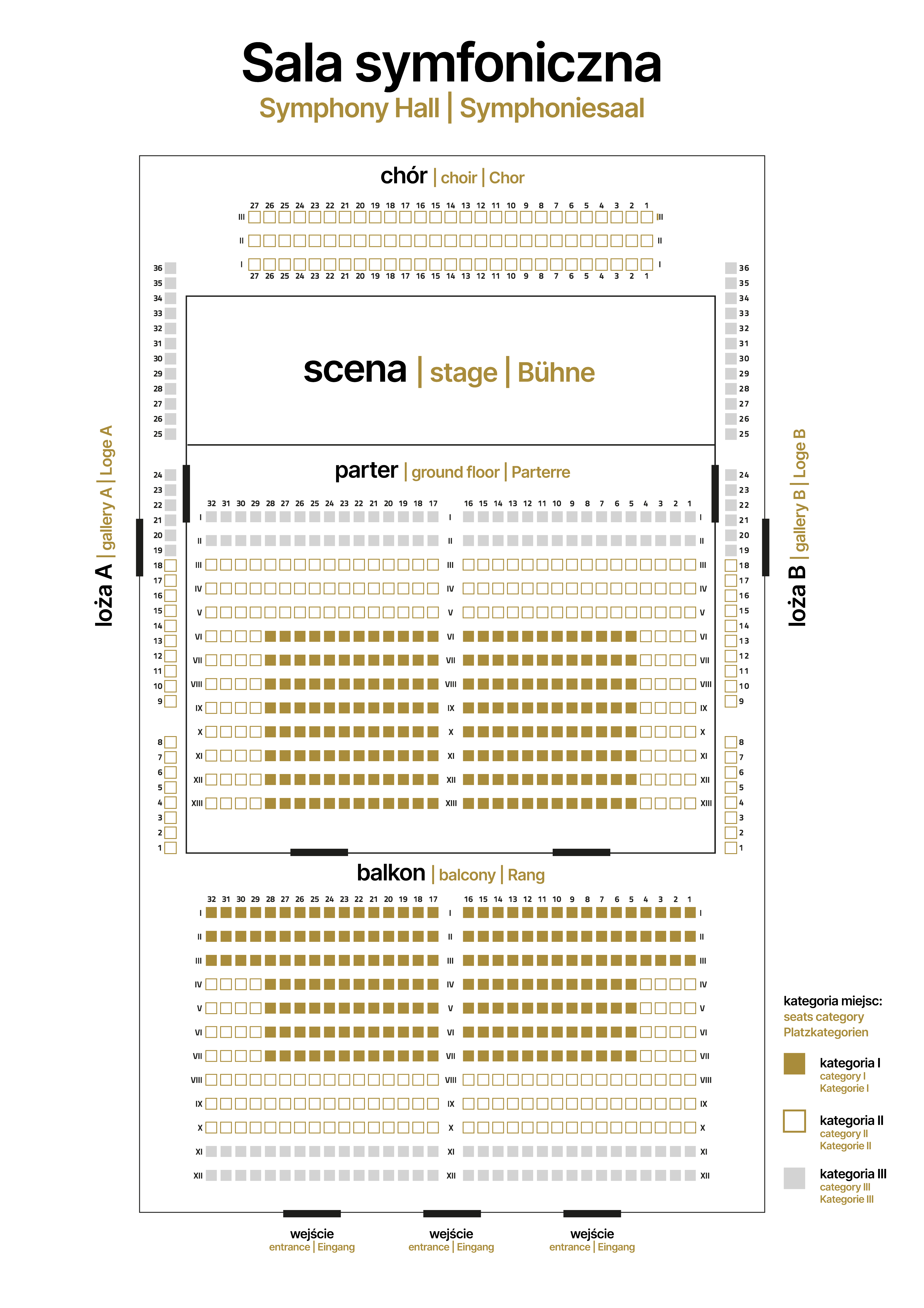
Symphony HallFilharmonia im. Mieczysława Karłowicza w Szczecinie
ul. Małopolska 48
70-515 Szczecin