A klezmer dance gathering unstoppable momentum, a cello taking on the full force of the orchestra, and music that suddenly transforms the concert hall into the vast interior of a cathedral – this is the journey awaiting audiences this Friday. The Szczecin Philharmonic Symphony Orchestra will be conducted by Dainius Pavilionis, with cellist Jeremias Fliedl appearing as soloist.
The concert opens with Mieczysław Weinberg's Rhapsody on Moldavian Themes. This is far from a gentle musical postcard of folk melodies. It begins with nostalgic, lyrical themes, but gradually gathers speed and reveals an increasingly vibrant and exuberant character. The music brings together traditions rooted in the multicultural heritage of Moldova and Bessarabia: alongside Moldavian folk melodies, unmistakable Jewish influences emerge. The finale bursts into life with the irresistible energy of a klezmer ensemble, its rhythms becoming ever more exhilarating. Lasting little more than a quarter of an hour, the work is packed with vivid colours, dramatic contrasts, and memorable themes.
Shostakovich composed his Cello Concerto No. 1 in E-flat major, Op. 107 in 1959 for Mstislav Rostropovich. The famous story of its astonishingly rapid preparation is entirely true: Rostropovich learned the entire solo part from memory in just four days – practising intensively for the first three before performing it for the composer on the fourth.
Although the concerto is formally in four movements, the final three are performed without interruption. One of its most distinctive features is the extended solo cadenza, which functions as an independent third movement. The orchestration is equally unusual. Shostakovich dispenses with the traditional brass section: apart from a single French horn, there are no trumpets, trombones, or tuba. That lone horn at times becomes almost a second soloist. As if that were not enough, the finale introduces a distorted quotation of the Georgian song Suliko, widely believed to have been one of Stalin's favourite songs. Shostakovich twists the melody into a grotesque and fiercely ironic conclusion.
Schumann's Rhenish Symphony was composed in 1850, shortly after the composer moved to Düsseldorf, inspired by his new surroundings and his impressions of the Rhineland. Rather than depicting specific places, Schumann sought to capture the spirit of the region: the vitality of public life, folk celebrations, the landscape, a sense of community, and religious grandeur. The first movement begins immediately with a broad and energetic theme, while the following two movements are more dance-like and intimate in character. The most remarkable is the fourth movement, Feierlich ("Solemn"), inspired by the profound impression that Cologne Cathedral made on the composer. Schumann originally described it as music in the character of an accompaniment to a solemn ceremony, though he removed this indication before publication. It is followed by a bright, animated finale, like stepping out of the cathedral's half-light and back into streets full of life.
Joining our Symphony Orchestra in these three magnificent works are the Lithuanian conductor Dainius Pavilionis and the Austrian cellist Jeremias Fliedl. Pavilionis is a distinguished conductor and teacher, serving as Professor and Head of the Conducting Department at the Lithuanian Academy of Music and Theatre. Fliedl is one of the most outstanding Austrian cellists of the younger generation and a prizewinner of the prestigious Queen Elisabeth Competition in Brussels. He has appeared at the Salzburg Festival as well as in Vienna's Musikverein and Konzerthaus, performing as a soloist with leading European orchestras.
DETAILS
Travel Diary
09-04-2027 19:00
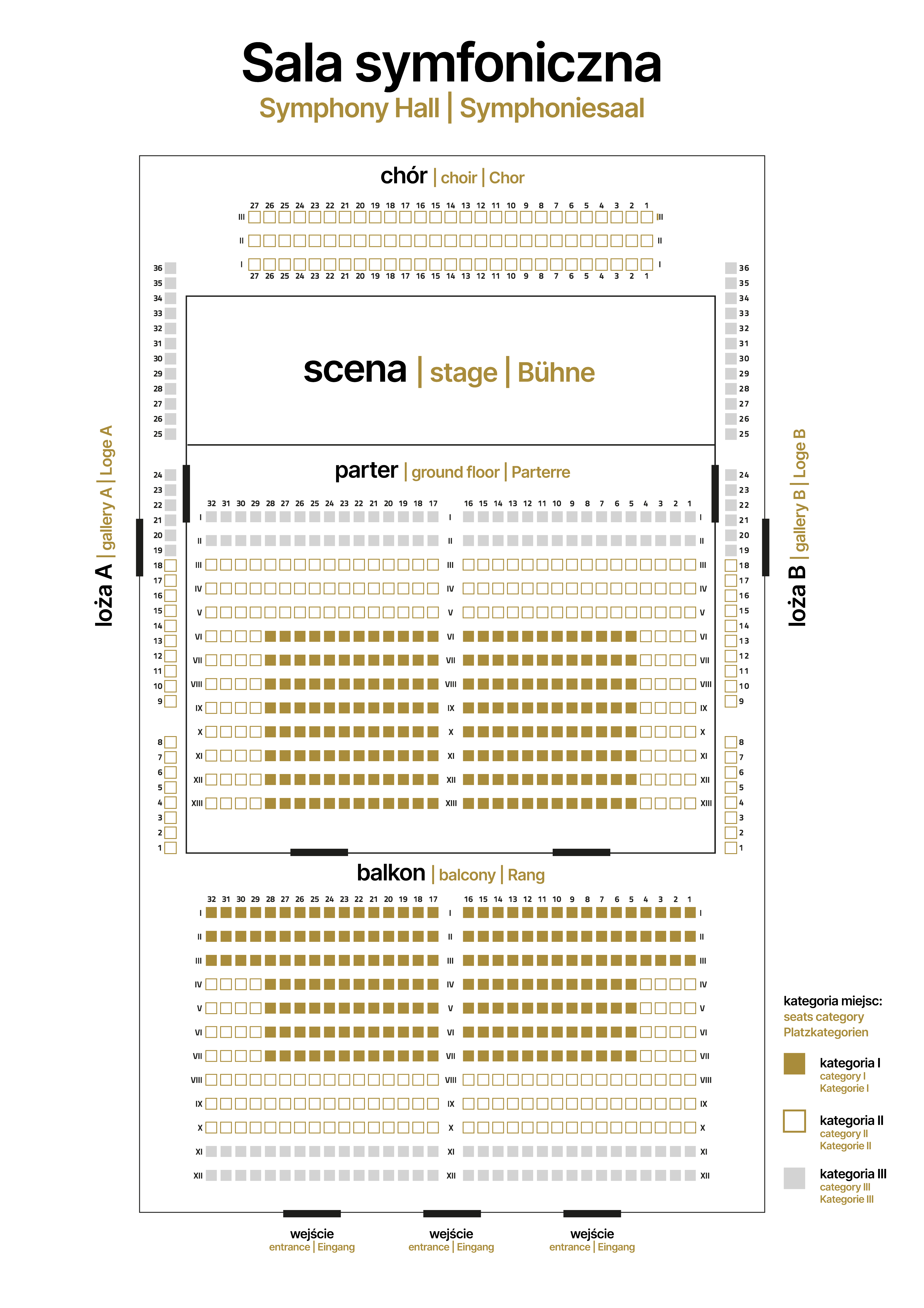
Symphony HallFilharmonia im. Mieczysława Karłowicza w Szczecinie
ul. Małopolska 48
70-515 Szczecin